

Authored by Noah Yao | Principal & Lani Chun, PHD | Principal
Data investments are booming, but for many organizations, the results aren’t. MIT research uncovers that 95% of businesses get zero return on their enterprise AI solutions.
If you’re planning a new data project, we’ve identified where these initiatives typically go wrong and how to turn it into an asset.
The real problem: investment without intent
Companies continue to adopt new tools and data that promise better insights, efficiency, and stronger decision-making without assessing their actual business needs first. Without clear strategy or governance, even the most advanced solutions become expensive shelfware.
This often looks like:
- Purchasing data they don’t use
- Building dashboards no one needs
- Implementing tools without adoption
- Investing in AI without the data maturity to support it
In many cases, these efforts result in wasted time, budget, and missed opportunities.
Step one: start with “why”
“Why” has become lost in the haze of deadlines and the excitement of finding new things. Organizations often move forward without pausing to make sure they are clearly articulating the business problem being addressed, the stakeholders involved, and the intended outcomes the investment is expected to deliver.
Once a clear “why” is defined, you can create a framework to measure success against intent.
What this looks like in practice
Let’s take a look at a common example: implementing a data catalog.
We often see companies invest heavily in building a catalog to improve data access and enhance productivity. However, without a clearly defined “why,” these implementations fail to deliver results.
A more effective approach starts by asking: what’s actually slowing your business down?
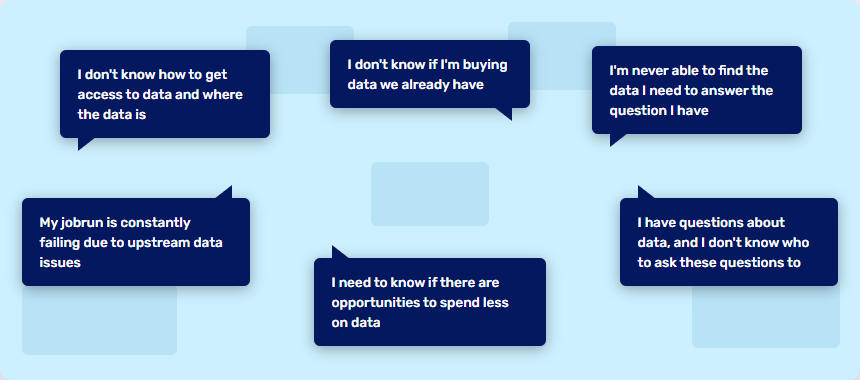
Think about the last time someone on your team complained about data. Maybe it was “I can never find the report I need” or “I don’t even know who owns this dataset.” Those frustrations are your starting point.
From there, you can group similar complaints into broader themes; those become your strategic goals. Each goal then points to something specific the catalog needs to actually do; those are your functional requirements. The table below shows what that looks like in practice.
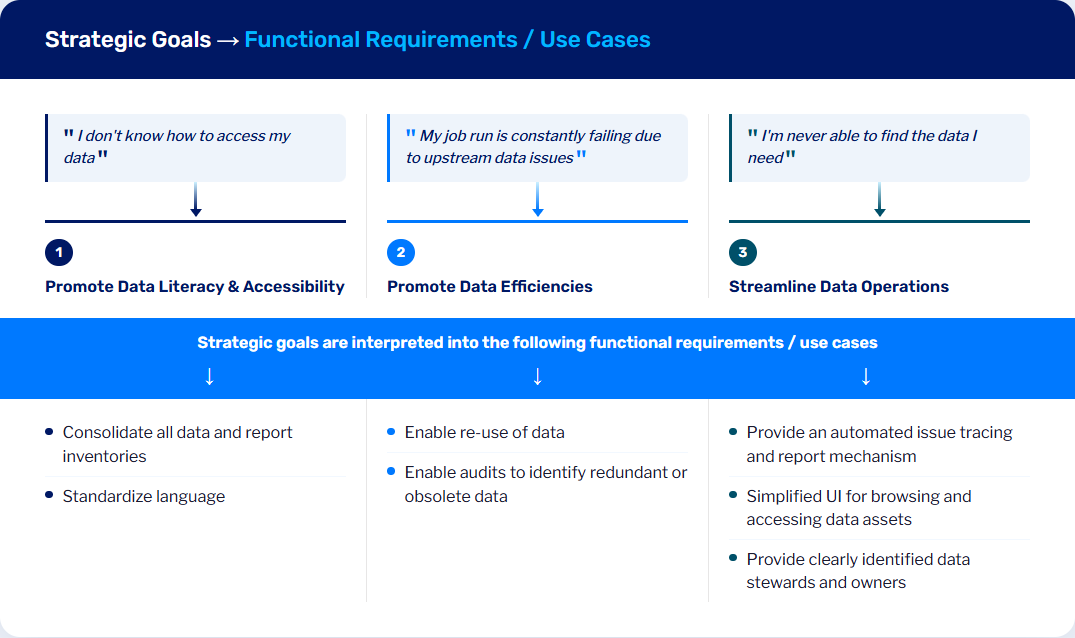
With those goals and requirements defined, you can finally have a more focused technical conversation — one where you’re evaluating solutions against a clear set of needs rather than a feature wish list. And because it’s grounded in your “why,” it’s a much easier one to have.
Step two: determine what works for your organization
AI solutions promise to streamline and simplify everything. The number of growing possibilities makes it feel like if you’re not implementing the latest, you’re falling behind.
Realistically, not everyone needs the most advanced version of a solution available. What matters is finding the version that actually fits your organization. Before jumping into any data investment, ask yourself:
- Does this directly address our “why” and subsequent functional requirements?
- Is our organization actually ready to adopt it? Are there any enablement barriers? (For example, purchasing a tool that requires capabilities you don’t yet have is just creating a new problem.) Will it deliver meaningful impact without overextending our resources?
- How quickly can we realistically implement it and start seeing results?
Let’s go back to our data catalog example. Once you’ve defined your goals and requirements, these questions make the build-vs-buy decision much more straightforward. The table below maps three common approaches against those criteria, so you can see how the right answer changes depending on where your organization actually is.
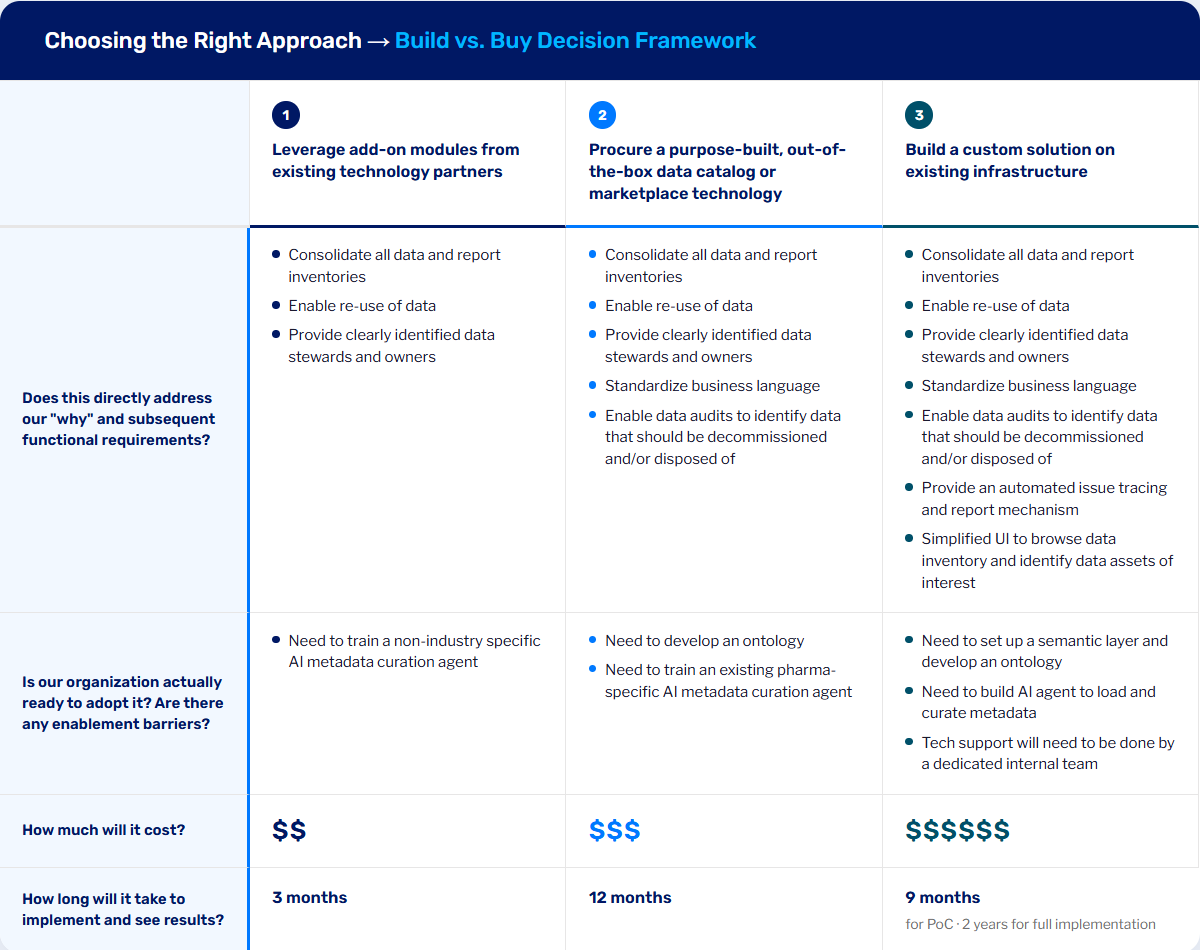
Choosing the right approach is only half the battle. Once you’ve made that decision, it’s tempting to enable every feature, onboard every dataset, and build for every possible use case from day one. Resist that urge.
Start with what directly serves your “why.” You can always expand later. Overbuilding early is one of the fastest ways to lose momentum and end up back where you started.
Step three: measure what actually matters
Even with a clear “why” and the right solution for you, many organizations still fall into the same trap. They measure activity, not value.
Common metrics include:
- Number of dashboards created
- User logins or page views
- Volume of data ingested
While this is easy to track, it doesn’t tell you if your investment is truly working. Measuring real value looks like:
- Faster or better decisions
- Reduced time to insight
- Increased adoption by the right users
- Fewer redundant processes or data assets
This is where many data initiatives break down. Success metrics are often disconnected from the original intent, making it nearly impossible to prove ROI or course-correct when needed.
To avoid this, your success metrics should directly tie back to your “why.” For example, if your goal is improving data accessibility, measure:
- How many users are successfully finding and using data
- Reduction in time spent searching for information
- Decrease in duplicate data requests
The focus should be whether the implementation is producing better outcomes, not how many people logged into a platform.
Looking ahead
As organizations continue to explore new data and AI opportunities, applying a more disciplined, intentional approach to evaluating these investments will ensure they deliver your intended impact.
Thinking about investing in a new data project? Connect with us to make sure it’s going to help you, not slow you down.