


For years, many finance teams have been working to move to cloud ERP systems, implement EPM tools, and improve their data architecture. In 2026, those foundational investments are no longer optional and are instead baseline must-haves.
With the rise in AI technology, finance leaders are now expected to transform their teams into the Bloomberg Terminal of the organization, a centralized hub that connects data, analyzes trends, and delivers the insights leaders need to make faster, smarter decisions.
Just as the Bloomberg Terminal gives instant, centralized access to market intelligence, modern finance teams must become the strategic intelligence hub for the business. They need to connect enterprise data, provide insights, utilize AI, and guide daily operation decisions toward long-term strategy.
Companies that achieve this shift will empower their finance teams to influence outcomes across the entire enterprise. But to get there, finance leaders have to first focus on three foundational capabilities.
1. Build an Integrated Finance Tech Stack (ERP + EPM)
AI is often seen as the “Ozempic for finance.” In other words, a cure-all that promises to eliminate inefficiencies and speed up decision-making.
But the reality is that AI can only be as powerful as the systems and data behind it. If your company is still relying on legacy systems or fragmented data environments, it will be impossible to unlock meaningful value from AI.
Forward-looking finance teams are prioritizing modern, connected cloud platforms, particularly by integrating ERP and EPM systems.
Think of these systems as the core operating model of finance:
- ERP is the heart of the organization, capturing transactions, supply chain data, and operational activity.
- EPM is the brain, enabling planning, forecasting, and financial analysis.
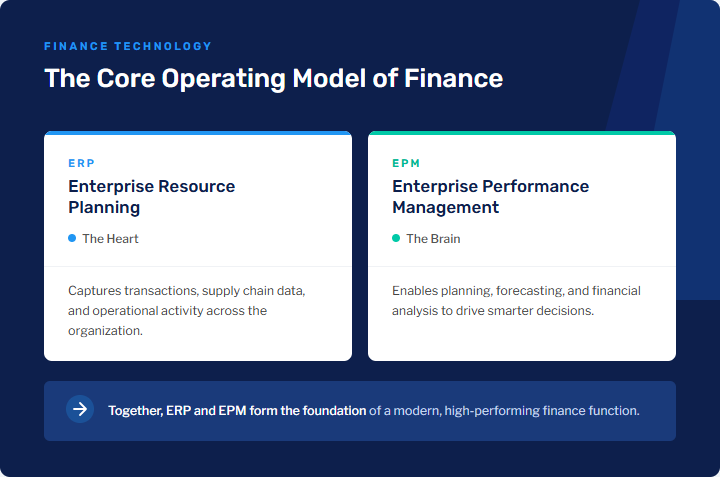
When these systems operate together, they provide the real-time financial intelligence organizations need to move from reactive reporting to proactive decision-making.
And once that foundation is in place, AI capabilities can begin delivering meaningful impact.
2. Activate the AI Already Embedded in Your Systems
Many organizations approach AI as a separate tool, experimenting with chatbots or standalone models. However, the most immediate value often comes from the AI already embedded within the enterprise applications you already use.
Leading platforms like Oracle are rapidly expanding these capabilities. Embedded AI can now:
- Analyze financial forecasts
- Detect anomalies or emerging revenue gaps
- Search ERP and supply chain data
- Identify operational drivers of performance
- Recommend actions to improve outcomes
For example, within Oracle Intelligent Performance Management (IPM), finance leaders can ask a simple question, like: “How are we trending toward our Q3 revenue forecast?”
IPM can analyze forecast assumptions, detect potential shortfalls, and even trace the issue back through the supply chain or operational data to recommend actions to close the gap before the quarter ends.
This is why for many companies, the key is not implementing new AI initiatives but activating the capabilities already available within your platforms.
We recommend this crawl-walk-run approach to get started:
- Identify embedded AI features within your current systems
- Pilot them within a limited set of forecasts or accounts
- Expand usage as the team becomes more comfortable with the insights generated
When you start this way, your finance team can build confidence in AI and deliver measurable results.
Oracle Cloud EPM clients, check out our blog on how to implement a 90-day Oracle IPM pilot for forecasting!
3. Expand Finance’s Role as the Owner of Enterprise Data
To fully leverage AI and modern systems, finance teams must also expand their role in managing enterprise data.
High-performing finance teams increasingly act as data brokers within the organization, connecting information from across departments and translating it into strategic insights.
This requires finance professionals to develop capabilities beyond traditional accounting and reporting, including:
- Master data management
- Data governance
- Operational metrics analysis
- Enterprise data strategy
Just as importantly, finance teams must gain deeper visibility into how data is created across the organization.
Many operational environments, like manufacturing floors and logistics networks, generate vast amounts of data through sensors, systems, and operational workflows. Understanding these inputs helps finance connect operational drivers directly to financial performance.
Naturally, this means finance leaders must step outside the office and work more closely with operations and IT teams to understand:
- What data exists
- Where it originates
- How it connects to financial outcomes
When finance understands the entire data lifecycle, not just the final report, it can move from reacting to results to proactively shaping them.
How Finance Leaders Can Begin the Transformation
The most successful finance organizations are now being defined by how effectively they guide decisions.
Why? Because modern finance functions are evolving along a clear progression:
- Information: assembling financial data
- Insight: analyzing patterns and trends
- Impact: helping the organization execute on strategy
- Influence: advising leadership on decisions
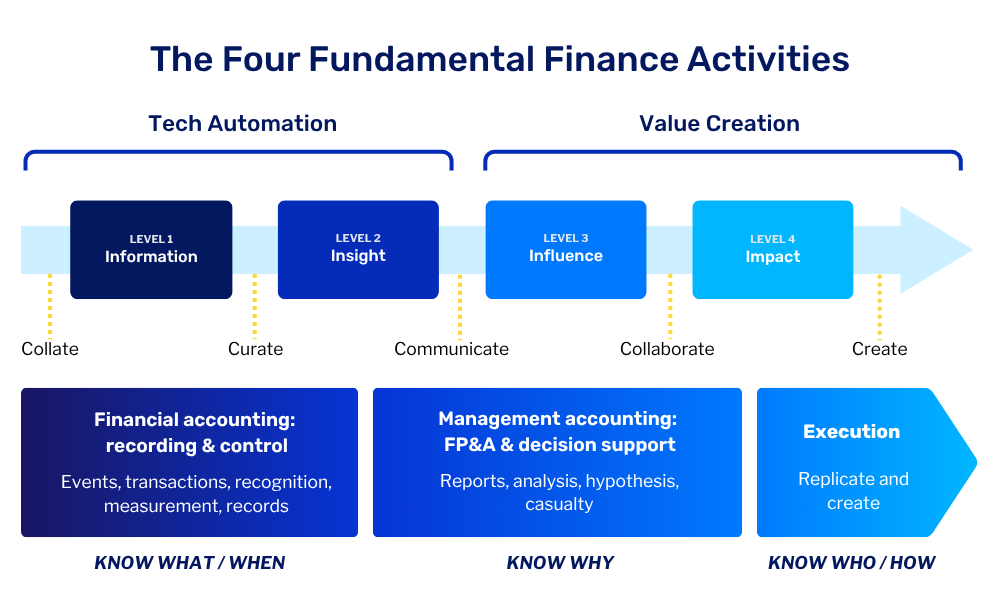
Becoming the “Bloomberg Terminal” of the organization means shifting more of finance’s time and talent toward the top of that value chain, where insights translate directly into business outcomes.
If you’re ready to modernize your finance function, but you’re not sure where to start, we can help! We work directly with your team to understand your current challenges, find opportunities to automate, and build an actionable transformation roadmap that fits your needs. Contact us today to get started.