

Authored by Nate Kebekabe | Senior Consultant
One of the first things we hear from suppliers navigating the Microsoft SSPA (Supplier Security and Privacy Assurance) assessment for the first time is some version of: “I don’t even know where to start.” That’s a completely reasonable reaction.
The notice arrives, the timeline feels compressed, the terminology is unfamiliar, and the stakes are real. Falling behind on SSPA requirements can affect your ability to onboard or continue work with Microsoft.
The good news: in our experience, most organizations already have solid security and privacy practices in place. The real challenge is knowing what Microsoft is actually looking for at each stage and how to avoid delays. This guide walks through the SSPA process step by step, so you know what to expect and how to approach each phase with confidence.
Why Microsoft Requires SSPA and Why Timing Matters
Microsoft uses SSPA to gain assurance that suppliers handling Microsoft data meet baseline expectations for security, data privacy, and risk management. From Microsoft’s perspective, SSPA is about establishing trust and consistency across its supplier ecosystem.
SSPA activities are often tied to contract milestones. When required actions are not completed on time, suppliers may experience onboarding delays or limitations on the type of work they can perform. This is why understanding the sequence of activities and acting early is so important. Knowing what to expect at each stage makes all the difference.
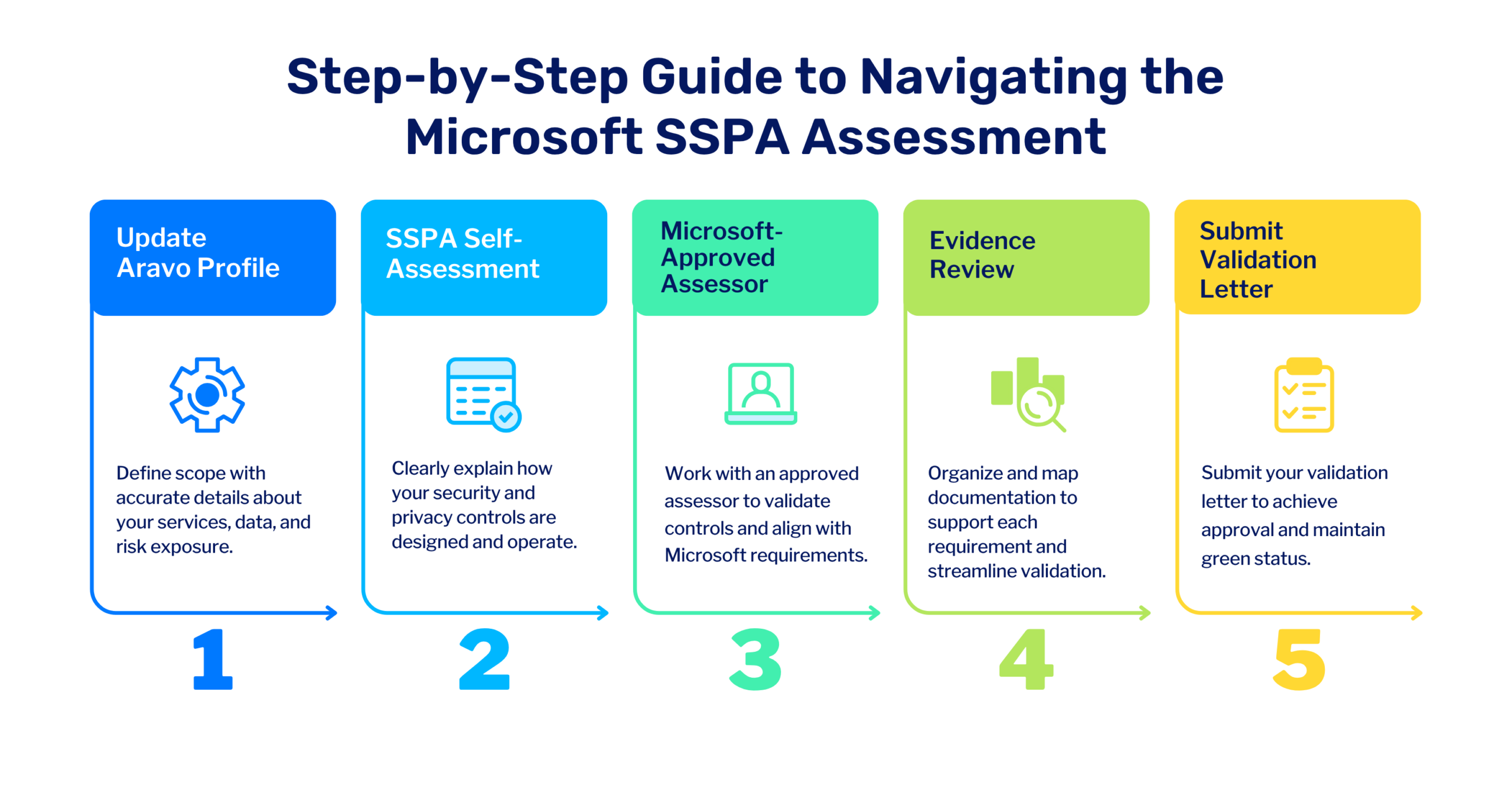
Step 1: Update Your Microsoft (Aravo) Profile
The first and most critical step in SSPA is updating your Aravo portal, which is not simply an administrative requirement; it directly determines the scope of your SSPA obligations.
Your supplier profile responses describe the services you provide to Microsoft, the types of data you handle, where that data is stored, and whether subcontractors are involved.
Microsoft uses this information to determine which SSPA requirements apply to your organization and how your overall risk profile is evaluated.
Suppliers sometimes move quickly through the supplier profile questions within the Aravo portal, assuming it is a formality. In practice, inaccurate or overly broad responses can unintentionally expand the scope of assessment and create additional requirements later in the process. Taking time to ensure the supplier profile accurately reflects how your services actually operate can prevent delays and reduce unnecessary complexity.
Step 2: Complete Your SSPA Self-Assessment
Once the supplier profile is complete, you will be asked to complete your SSPA self-assessment — a step that, in our experience, creates the most uncertainty for first-time suppliers.
Unlike a simple checklist, the self-assessment asks you to explain how your security and privacy controls are designed and how they operate in practice. These responses will later be reviewed and validated by an independent assessor, so clarity and consistency are essential.
Suppliers often worry that imperfect answers will automatically lead to Red Status. In reality, Microsoft understands that controls vary across organizations. What matters most is that responses are honest, reasonable, and supported by documentation that reflects how controls actually function.
Step 3: Work with a Microsoft-Approved Independent Assessor
After completing the self-assessment, Microsoft requires suppliers to engage a third-party independent assessor, like SC&H, to validate controls and confirm compliance.
The assessor reviews your Aravo responses, evaluates your self-assessment, and examines supporting documentation to determine whether your controls align with Microsoft’s SSPA requirements. This is not intended to be adversarial. It is a structured validation process designed to confirm compliance and identify any gaps that may need remediation.
An experienced assessor also helps translate Microsoft’s expectations into practical terms. This reduces confusion and allows suppliers to focus on the controls that matter most for timely completion.
Step 4: Evidence Review
For many suppliers, the most stressful part of SSPA is understanding what evidence is sufficient for each requirement.
This is where working with an assessor becomes especially valuable. Rather than guessing or overproducing documentation, assessors help map existing policies, procedures, and records to specific SSPA requirements. In many cases, a single document can support multiple controls when positioned correctly.
When evidence is organized early and aligned to responses, the validation process moves more efficiently, and the risk of timeline-driven escalation is significantly reduced.
If evidence gaps are found, a good assessor will also provide clear direction and support to help you meet Microsoft’s requirements. The assessor can’t implement the control for you, but they can explain in simple, actionable ways what you need to do to resolve the gap in a timely manner.
Step 5: Submit Your Validation Letter
Once the independent assessor completes validation against the data protection requirements, the assessor issues the supplier an SSPA validation letter. The supplier is then responsible for uploading the validation letter to the appropriate task within their Aravo profile.
After submission, Microsoft reviews the validation letter to confirm that SSPA requirements have been satisfied. Once approved, the supplier’s “green” status is updated, allowing work to continue without interruption and preventing escalation to yellow or red status.
How to Avoid Yellow and Red SSPA Status
Red status is rarely the result of inadequate security or privacy controls. More often, escalation comes down to things like:
- Late engagement
- Unclear self-assessment responses
- Misaligned Aravo data
- Delays in evidence submission
These are process problems, not program failures.
Suppliers that navigate SSPA successfully tend to treat it as an ongoing process rather than a one-time task. They start early, approach each task on the Aravo portal thoughtfully, and work closely with an experienced assessor who understands Microsoft’s review expectations.
Getting Through SSPA Without the Last-Minute Scramble
SSPA can feel intimidating, especially when deadlines are tight and contract work is at stake. With the right preparation and guidance, however, it becomes a structured and manageable process. As a Microsoft-approved independent assessor, SC&H has guided organizations of all sizes through this process and is glad to help you do the same.